Ingredient Guide
Rhodiola Rosea: Should You Be Taking It?
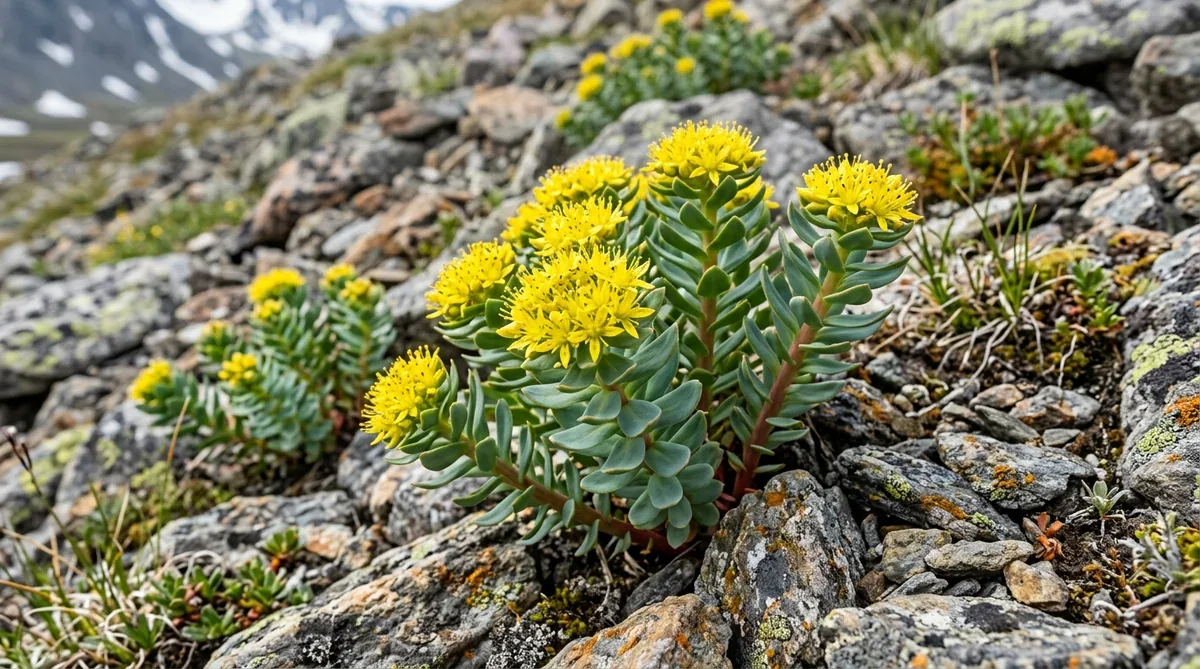
You slept a decent number of hours. You got up at a reasonable time. And the first two hours of the day still feel like wading. Not sleepy exactly, just flat, with nothing in you switching on until something external forces it to. If that is the shape of most of your mornings, rhodiola rosea is one of the names that keeps coming up.
What is rhodiola rosea?
It is a tough little flowering plant that grows on cold, rocky ground, and what you would actually take is an extract of the root.
The label that matters is adaptogen. That word gets used loosely enough to mean almost nothing, so here is the version worth holding onto: an adaptogen eases the demand on your adrenal system. It does not spike your cortisol the way a stimulant does, and it does not block it either. It supports the output you are already making, so your adrenals are not working as hard to produce it.
That stays abstract until you attach it to a morning. Your cortisol is supposed to climb as you wake up, and that climb is the thing that gets you upright and pointed at the day. When you wake up and feel no lift at all, when eight hours in bed leaves you groggy before you have done anything, you are not getting much out of that morning rise. Rhodiola helps you get more from the cortisol your body is already producing, which is a quieter proposition than a stimulant but a more sustainable one.
What does rhodiola actually do for you?
Stress is what most people come to it for, and the stress findings hold up better than I expected them to. Give it four weeks and the measures move, all of them, by margins large enough to count as clinically relevant rather than just visible on a chart, and that was across 101 people. Some of them noticed something inside of three days, which is fast for anything in this category.
Mental tiredness is the other half of it, and this is where the numbers get oddly specific. Take young, healthy doctors and put them on night shifts, which is close to a laboratory for flattening a person, and their performance on work-related tasks improved by around 20%. That figure is a composite of energy levels, short-term memory, concentration and speed of audio-visual perception, which is to say it is not one soft self-reported score doing all the lifting. Something similar showed up in 161 military cadets on night duty, whose cognitive processing held together better than it otherwise would have. And students grinding through an exam period reported less mental stress, better sleep, and more motivation to sit down and study, which may be the most recognizable version of the benefit for anyone who has ever had a deadline sitting on their chest.
The physical side is real but you should scale your expectations down for it. In endurance work it extended time to exhaustion by 24 seconds. Twenty-four seconds is twenty-four seconds. If you are not racing anything, that is close to nothing, and I would rather say so than dress it up. In a simulated cycling race, though, riders finished significantly faster on it than on placebo, and the part I find more interesting is that it changed how hard the effort felt to the people doing it. Same work, lower perceived cost. For a long session, that difference is what determines whether you finish it.
Is rhodiola a stimulant?
Technically, yes. It fights off tired feelings, and anything that does that sits in the stimulant family whether it feels like one or not. It is thought to work on neurotransmitters including dopamine and noradrenaline, which are involved in regulating arousal and how sharply you perceive what is in front of you.
But it is an unusual member of the family. It does not appear to raise your heart rate or your blood pressure, and it does not suppress appetite, which are the three things most stimulants do to you whether you asked for them or not. The difference seems to be in the approach. Caffeine and its relatives push your central nervous system to run harder. Rhodiola seems to help your body adapt its response to a stressful event instead. You end up better equipped for the thing rather than revved up at it, and those are genuinely different experiences.
When should you take it?
Morning. That is most of the practical advice and it is not negotiable. Your cortisol is meant to be falling through the evening, and taking something in the evening that supports cortisol output risks pushing it up at precisely the hour it should be winding down. If your sleep is already fragile, that is a bad trade.
The second piece is that you should rotate your adaptogens and take time off them. Your body adapts to constant input, which is the whole point of adaptogens and also the reason taking one every single day forever tends to flatten its effect. Weekdays on, weekends off is a sane pattern and an easy one to remember, and you will get more out of it over months than you would by never putting it down.
Who should take rhodiola?
In healthy people with nothing much wrong with them, it looks well tolerated and modestly useful, and “modestly” is doing honest work in that sentence. It is worth a look if you do endurance work or train regularly, and it is worth a look if stress has reached the point where it is getting in the way of you functioning, rather than just being an unpleasant background hum.
Where side effects turn up, they appear to be mild, and the ones reported are dizziness and dry mouth. Not nothing, but not alarming either. As with anything you are adding on purpose, run it past your doctor first, particularly if you are taking other medication.